
Imagine a leadership meeting in Accra. The CEO wants artificial intelligence to improve customer experience. The CIO wants ageing applications modernised. Finance wants better visibility into technology spending. Operations wants automation, while the security team is concerned about the risks created by every new digital service.
Each priority makes sense. The problem begins when they are treated as separate projects. This is the defining shift in digital transformation in West Africa: organisations are moving beyond simply adopting technology towards connecting cloud, data, AI, cybersecurity and automation around measurable business outcomes.
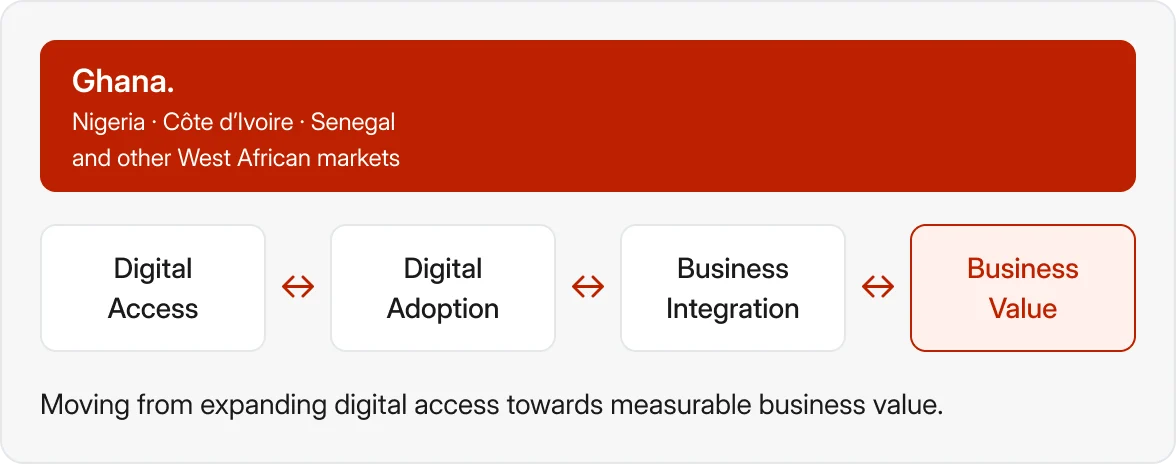
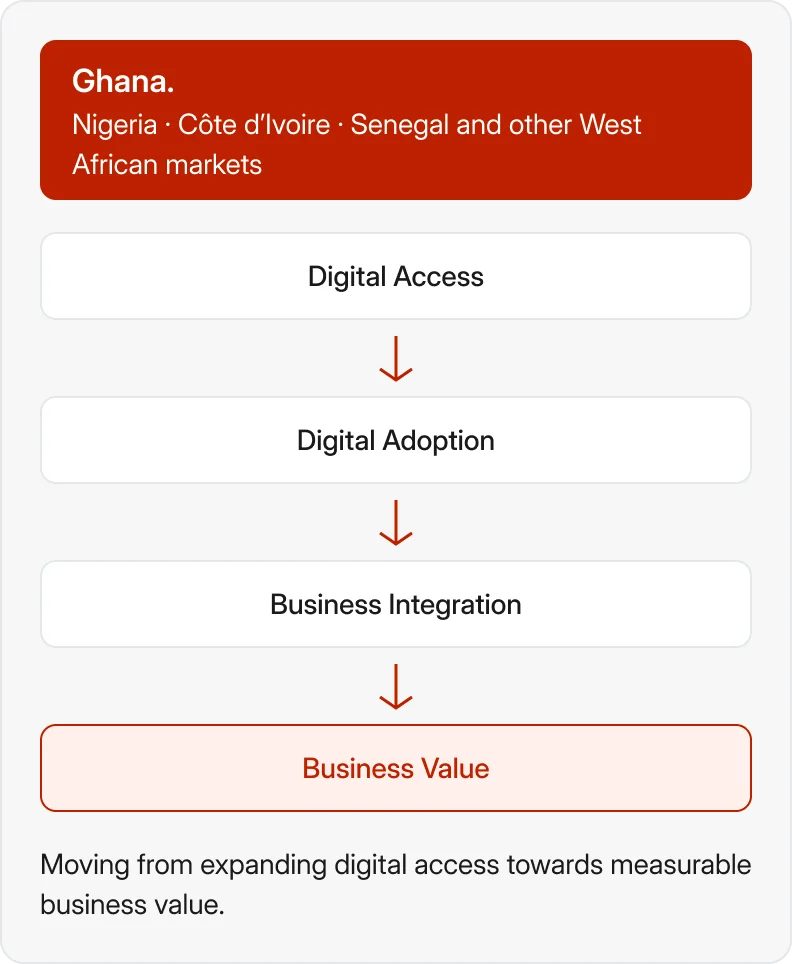
Ghana reflects both the progress and the opportunity. Digital infrastructure and mobile connectivity have expanded significantly, yet a gap remains between access to technology and its productive use.
For business and technology leaders, the next competitive advantage will not come from owning more digital tools. It will come from using technology to create greater efficiency, stronger customer experiences, resilience and sustainable growth.
From Digital Access to Business Value
Cloud Is Moving From Migration to Business Value
The cloud conversation is changing. A few years ago, organisations were asking: “Should we move to the cloud?” Today, the better question is: “What business value are we getting from the cloud?”
Across Africa, cloud adoption has matured, but organisations still face challenges around legacy applications, cost management, cybersecurity, compliance and operational complexity. For West African businesses, moving infrastructure into the cloud is therefore only the beginning.
Cloud investments should contribute to outcomes such as:
- Faster deployment of services.
- Improved application performance.
- Greater business continuity.
- Better technology cost visibility.
- Stronger security.
- Easier scalability.
- Improved employee and customer experiences.
This means the next stage of cloud transformation will focus increasingly on modernisation, optimisation and governance.
For executives, cloud maturity should not be measured simply by how many workloads have migrated. It should be measured by how effectively the organisation can use cloud technology to respond to business change.
AI Is Moving Into Everyday Business Operations
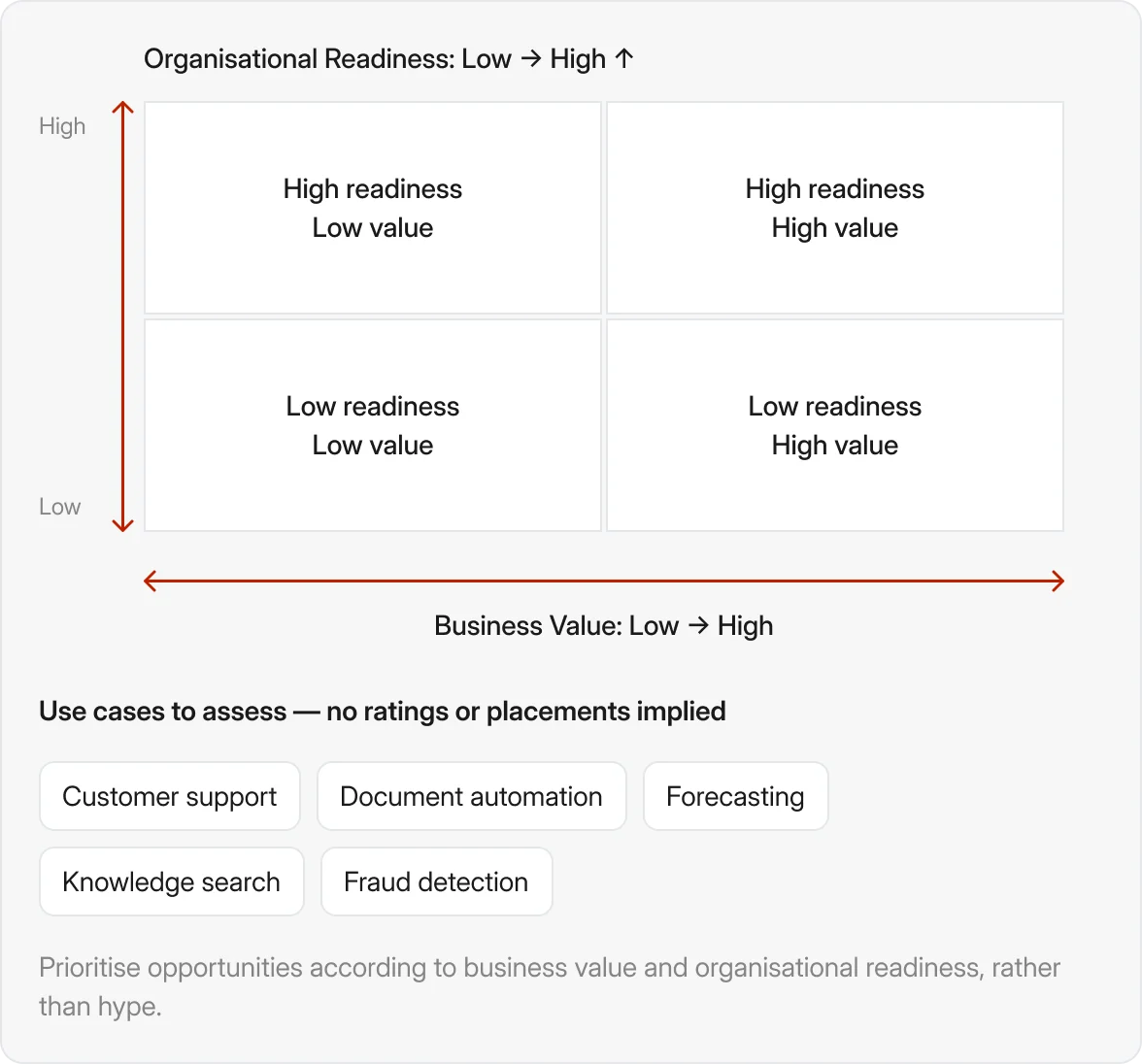
Artificial intelligence is becoming one of the most important digital transformation trends across West Africa. Ghana’s National Artificial Intelligence Strategy reflects growing regional interest in responsible AI adoption, infrastructure, data governance, skills development and practical applications. Other West African markets, including Côte d’Ivoire and Senegal, are also strengthening their digital and AI ambitions. But businesses should avoid confusing AI experimentation with AI transformation. Launching several AI pilots does not automatically create value. The stronger question is: Where can AI improve an important business process?
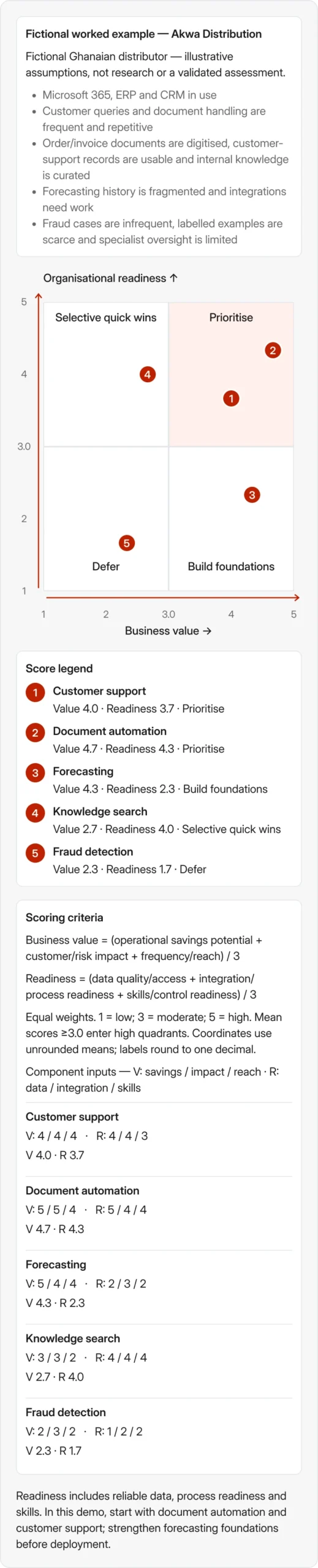
Potential opportunities include customer-service support, document processing, fraud investigation, employee knowledge search, forecasting and workflow automation. The organisations that gain the most from AI will not necessarily have the largest number of AI projects. They will identify high-value problems, provide AI with reliable data and redesign the surrounding processes. AI should begin with a business problem—not with the technology itself.
AI Opportunity Matrix
Data Is Becoming a Strategic Business Asset
Return to the leadership meeting in Accra. The CEO asks for a real-time view of customer performance. Finance produces one figure. Sales produces another. Operations has a third. The organisation has plenty of data, but leadership cannot confidently determine which version is correct.
This is one of the hidden barriers to digital transformation. As organisations introduce AI, automation and advanced analytics, they need greater confidence in the information supporting those technologies.
Leaders should be able to answer:
- Which information is authoritative?
- Who owns its quality?
- Who should have access to it?
- Where is sensitive information stored?
- Can trusted data support reporting, automation and AI?
Modern platforms such as Microsoft Fabric, Azure data services and Microsoft Purview can help organisations integrate, analyse and govern information. However, technology cannot compensate for poor data quality or unclear ownership.
The strategic lesson is straightforward: Organisations that strengthen their data foundations today will be better positioned to scale AI and automation tomorrow.
Cybersecurity Is Becoming Part of Transformation Design
Every digital transformation initiative creates opportunity—and additional risk. A new cloud workload introduces new access and configuration requirements. A customer application creates additional identities and data flows. An AI platform may require access to sensitive organisational information. A third-party integration introduces another dependency.
Cybersecurity can therefore no longer be treated as something added after transformation. It must become part of transformation design. Organisations should consider areas such as:
- Identity and access management.
- Cloud security.
- Data protection.
- Application security.
- Security monitoring.
- Backup and recovery.
- Incident response.
- Third-party risk.
The objective is not to eliminate every possible cyber risk. It is to create enough visibility, protection and resilience for the organisation to continue innovating confidently. West African organisations should not have to choose between innovation and security. The stronger strategy is secure digital transformation.
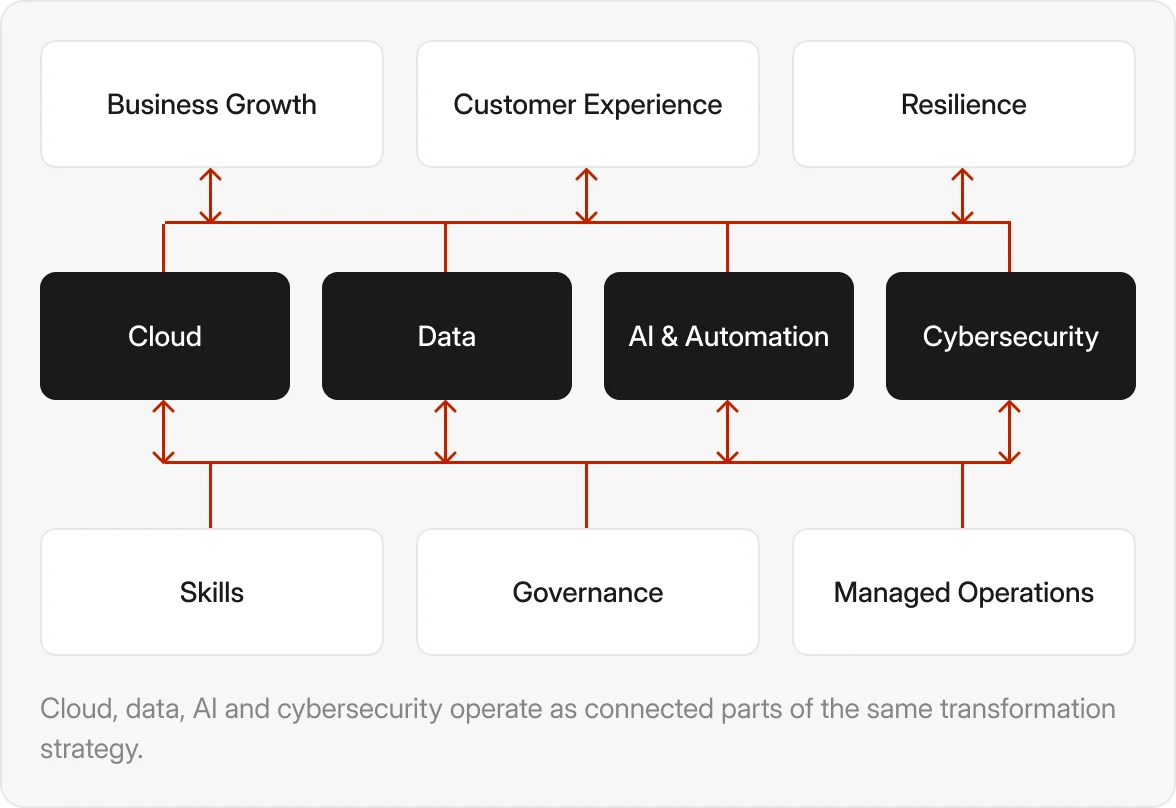
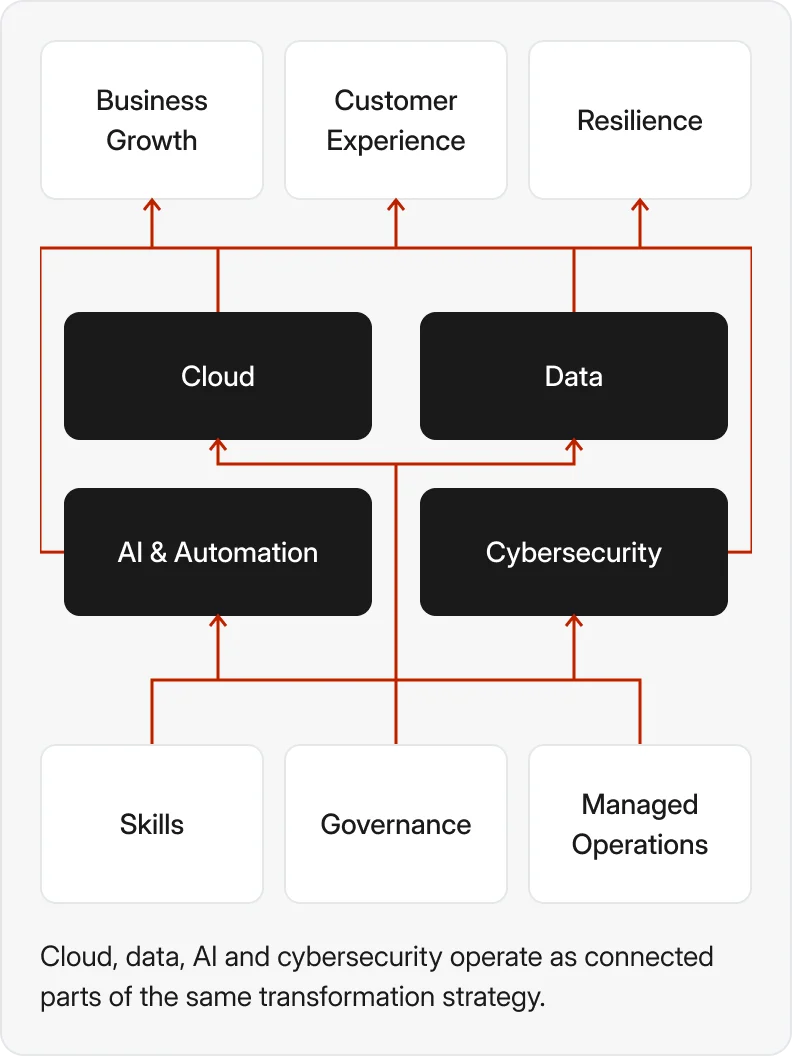
A Connected Digital Transformation Foundation
Automation Is Changing How Work Gets Done
Many organisations have already digitised forms, approvals and customer interactions. The next stage is not simply digitising more processes. It is redesigning them. Instead of asking: “How can we digitise this process?” leaders should increasingly ask: “Why does this process still work this way?” Automating an inefficient process simply creates a faster inefficient process. The greater opportunity comes from combining process redesign, automation and AI.
Consider customer onboarding. A traditional process may involve repeated data entry, manual document checks and several approvals. Rather than digitising every existing step, organisations can redesign the journey around the desired customer outcome and automate unnecessary work. This can improve productivity while allowing employees to focus on activities requiring judgement, creativity and customer engagement. The next phase of automation in West Africa will therefore be about redesigning work, not simply digitising tasks.
Skills and Managed Services Will Become More Important
Cloud, cybersecurity, AI, data engineering and application modernisation require increasingly specialised capabilities. Building and retaining every skill internally may not be practical for every organisation. This is creating a more flexible operating model: Internal leadership + skilled employees + automation + specialist partners + managed services. Organisations should retain ownership of strategy, risk and business outcomes. Technology partners can provide specialist expertise, implementation capability, monitoring and optimisation.
This is where Cloudware Africa can support organisations navigating digital transformation. Cloudware Africa’s capabilities span digital advisory, Microsoft Azure, cloud assessments, data and AI, application modernisation, cybersecurity, secure identity, SIEM/XDR and managed services. The value is not simply having access to multiple technologies. It is connecting them. Cloud decisions affect data. Data enables AI. AI creates new governance requirements. Applications introduce security considerations. And every digital environment eventually needs to be monitored, secured and optimised.
Successful digital transformation depends on making these decisions together.
What Business Leaders Should Prioritise
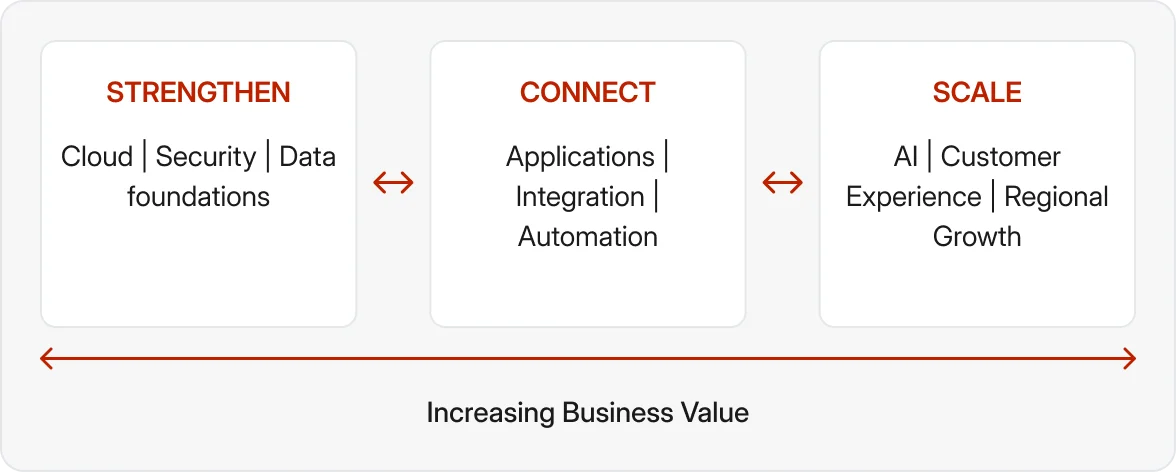
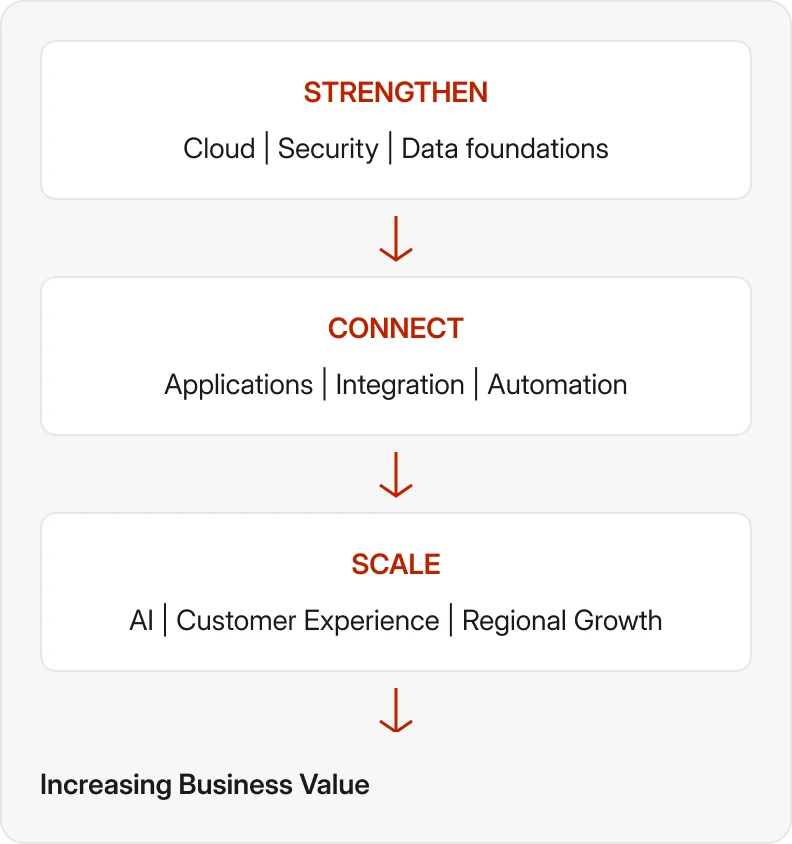
Organisations do not need to pursue every digital transformation trend simultaneously. A more effective approach is to sequence investment around three priorities.
- Build secure cloud foundations, modernise critical infrastructure, improve cybersecurity and identify the applications and data most important to the business.
- Integrate important information, simplify workflows, modernise priority applications and automate repetitive processes.
- Expand successful AI, automation and digital-service initiatives while strengthening governance, monitoring and resilience. For organisations expanding across West Africa, this stage should also consider regional scalability, regulatory differences and changing customer expectations.
A Three-stage Digital Transformation Roadmap
The Real Digital Transformation Trend in West Africa
Return to the Accra leadership meeting. The conversation began with separate priorities: cloud, AI, cybersecurity, automation and cost. But the leadership team eventually arrives at a better question: “What business outcome are we trying to improve, and which combination of technology, data, security and skills will help us achieve it?”
That is the conversation that will increasingly define digital transformation across West Africa. Cloud is becoming business infrastructure. AI is moving into everyday workflows. Data is becoming a strategic asset. Cybersecurity is becoming part of transformation design. Automation is changing how work gets done. And specialist partners and managed services are helping organisations close capability gaps. The organisations that lead this next phase will not necessarily be those that adopt technology fastest. They will be those that connect technology investment to productivity, customer experience, resilience and growth.
For Ghanaian organisations looking towards the wider West African market, that capability can become a significant competitive advantage. Cloudware Africa is positioned to support this journey by bringing together digital advisory, Microsoft cloud technologies, data and AI, application modernisation, cybersecurity and managed services.
Because ultimately, digital transformation should not be measured by how much technology an organisation deploys. It should be measured by how much better the business performs because of it.

Is your organisation adopting digital technologies—or building a transformation strategy that can turn those investments into measurable business value?
Speak with Cloudware Africa to assess your cloud, data, AI, application and cybersecurity priorities and develop a practical digital transformation roadmap for growth across Ghana and West Africa.
Share this article: